




Applied Projects
Overview
This project demonstrates how Release.art’s evidence-based, quality-driven engineering approach can be applied outside regulated industries, in a commercial context where correctness, consistency, and production quality still matter.
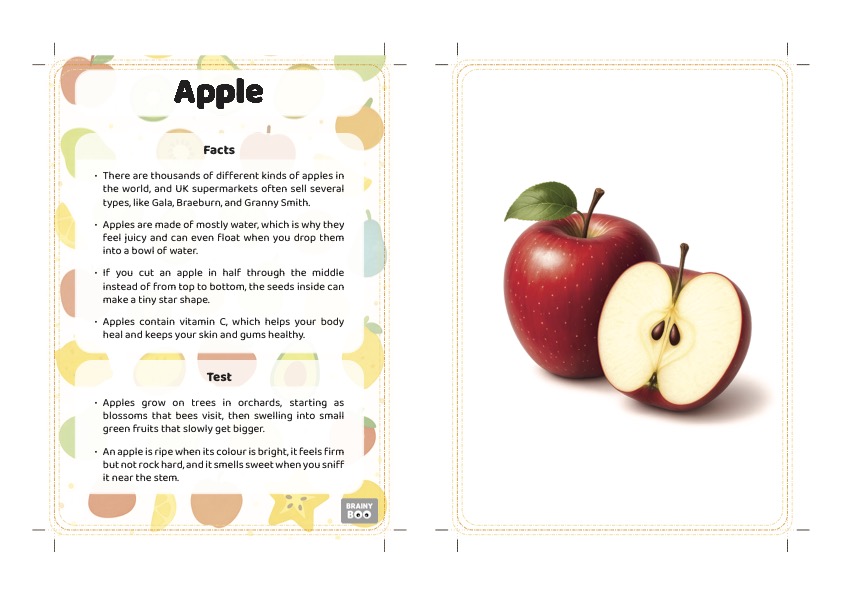
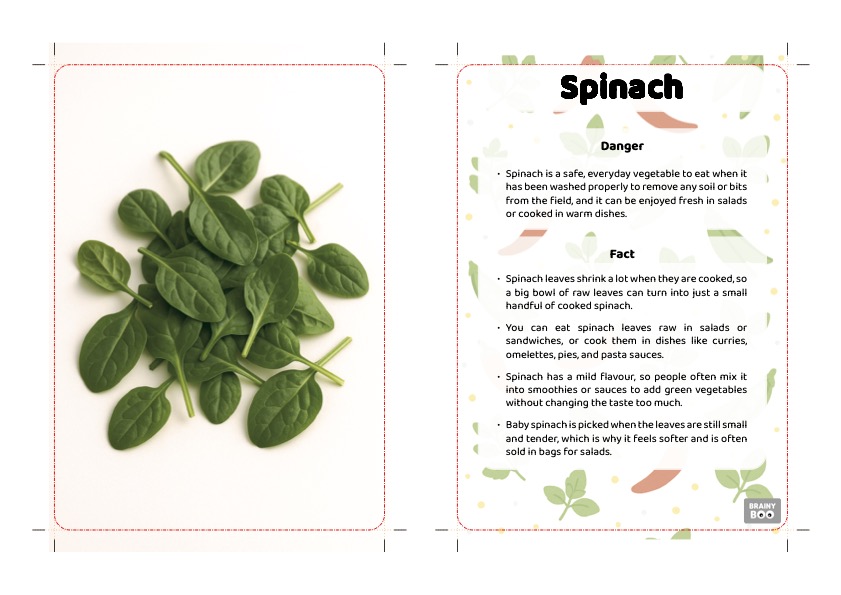
The outcome is an AI-assisted system for generating educational children’s flashcards intended for physical printing and sale, not digital experimentation.
Although not subject to formal regulatory frameworks, the project imposed strict constraints comparable to those found in regulated environments.
Problem context
Educational products for children carry implicit quality and trust requirements:
- Content must be factually correct and age-appropriate
- Information should be traceable to credible sources
- Outputs must be consistent across large production runs
- Errors discovered post-printing are costly and irreversible
The challenge was to design a system that could assist with content generation without sacrificing evidence, reviewability, or production quality.
Engineering approach
The system was designed as a controlled, multi-stage pipeline rather than an end-to-end generative tool.
Key principles included:
- Evidence-based content generation
- Each fact included on a card is supported by verifiable source material and structured references.
- Human-in-the-loop review
- AI-generated drafts are treated as inputs for editorial review, not final outputs.
- Deterministic layout and formatting
- Visual structure, typography, and spacing are reproducible and version-controlled.
- Production-grade output
- Final artefacts are generated as print-ready files (PDF/X, CMYK colour profiles), suitable for commercial printing.
- Reproducibility and auditability
- Card sets can be regenerated consistently from the same inputs, with clear linkage between content, sources, and output.
Quality assurance and safeguards
To avoid the risks commonly associated with generative content, the system includes explicit safeguards:
- Separation between content generation and approval
- Source attribution alongside generated facts
- Manual sign-off before inclusion in print runs
- Clear constraints on tone, vocabulary, and scope
- Pre-flight checks for print correctness and colour handling
These measures ensure that automation supports quality, rather than undermining it.
Why this project matters
Although this work sits outside traditional regulated sectors, it reflects the same engineering philosophy applied across Release.art’s core services:
- Explicit constraints over implicit behaviour
- Evidence and provenance over plausibility
- Reviewable outputs over opaque automation
- Quality gates at every irreversible step
It demonstrates how disciplined automation can be used responsibly in commercial, quality-critical products, not just compliance systems.
Scope and positioning
This project is presented as an applied example, not a standard product offering.
Release.art undertakes this type of work selectively, where delivery requirements align with our core principles around evidence, governance, and defensible outputs.
Get in touch
If you are interested in how similar approaches can be applied to your own products, content pipelines, or automation challenges, we would be happy to discuss them in context.
Initial conversations are exploratory and obligation-free.
Contact Us